Slide 1 of 4
Slide 2 of 4
Text “FAMILY” to 47226 for up to 20% off full price items
Slide 3 of 4
Slide 4 of 4
Your Browser Is No Longer Supported. Please use an alternative browser to improve your experience and security.
Choosing a stroller is one of the first major baby gear decisions many families make. From short neighborhood walks to bigger outings, your stroller often becomes part of your daily rhythm. With so many stroller types and features available, it’s natural to have questions about what will actually fit your routine. Understanding the different types of strollers can help you narrow your options before comparing features more closely.
There’s no one-size-fits-all stroller. Every family is unique! The right choice depends on how you plan to use it, where you live, your storage space, and your child’s stage.
This guide is designed to help you understand how to choose a stroller that fits your family’s routine.

While all stroller types are designed to help transport your child comfortably, differences in size, storage, and terrain capability can make one type more suitable than another. For example, full-size strollers tend to prioritize storage and structure, while lightweight models focus on portability, and jogging or wagon styles are often chosen for specific terrain or family needs.
Thinking about how and where you will use your stroller most often can make comparing the different types of strollers feel more manageable.
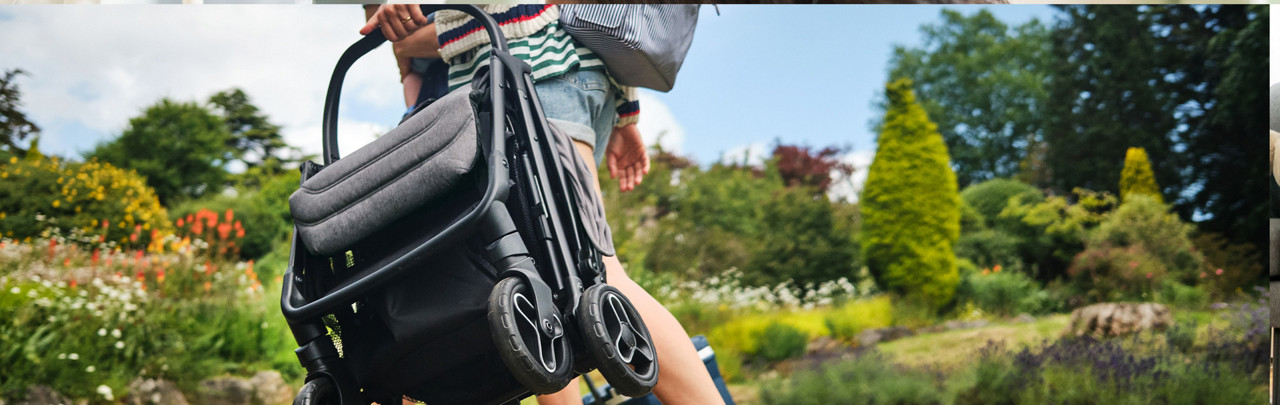
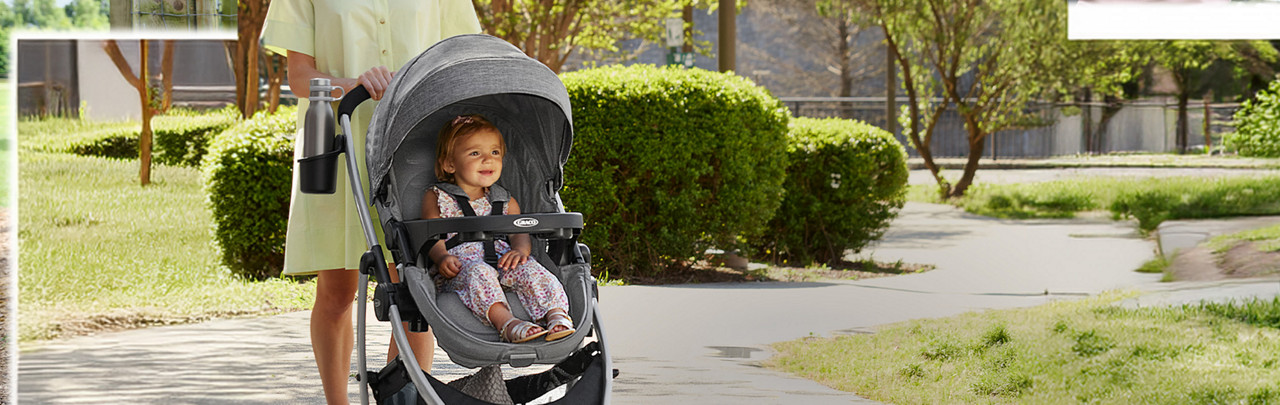
Full-size strollers are often selected as a family’s primary stroller because they are designed to balance comfort, storage, and long-term use.
You might choose a full-size stroller if you:
For families who want flexibility from the start, a stroller like the Modes™ Pramette Stroller offers multiple configurations in one frame. The toddler seat converts to an infant pramette, and the stroller accepts most Graco infant car seats. Always confirm compatibility with your specific model and review both product manuals before use.
Because full-size strollers include more structure and built-in features, they may take up more trunk space than compact options, but many families appreciate the added comfort and storage for everyday outings. If your goal is to choose a stroller that supports most of your daily routine, this category is often where families begin.

Lightweight strollers are designed for portability and easier storage. They typically prioritize compact folding and reduced weight over larger storage baskets.
You might choose a lightweight stroller if you:
The Ready2Jet™ Stroller weighs approximately 13.2 lb and features an automatic one-hand fold with a self-standing design. For families who prioritize portability, a compact stroller like this may feel easier to manage throughout the day, whether you are lifting it into your vehicle or storing it at home.
For families who travel, the Ready2Jet™ Stroller is also overhead-friendly, which may help simplify airport navigation. Always check with your airline for specific carry-on requirements. If you are planning to fly, reviewing guidance on traveling with a car seat and stroller on a plane can help you prepare.
If portability matters more than maximum storage capacity, a compact stroller may be the more practical choice for everyday use.
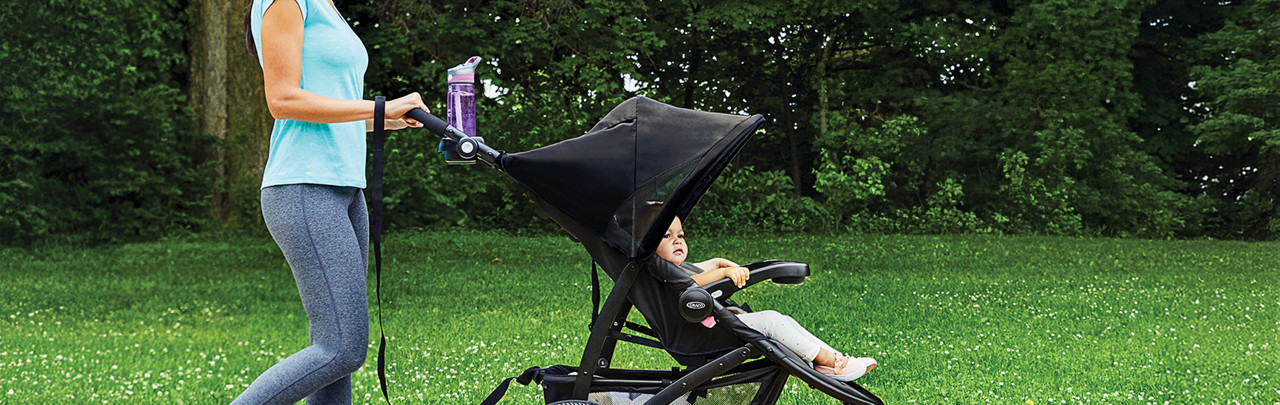
Jogging strollers are designed for families who want to walk or jog with their stroller, while helping provide stability on uneven terrain and at higher speeds. Their larger air-filled tires and three-wheel design are built to absorb movement on trails or bumpy sidewalks.
You might choose a jogging stroller if you:
The FastAction™ Jogger LX Stroller includes air-filled tires and a locking front wheel to help support stability. Because jogging strollers are typically larger and heavier, many families use them alongside a more compact stroller for errands or travel.
Always follow manufacturer guidance for age, weight, and activity recommendations to help ensure safe use.
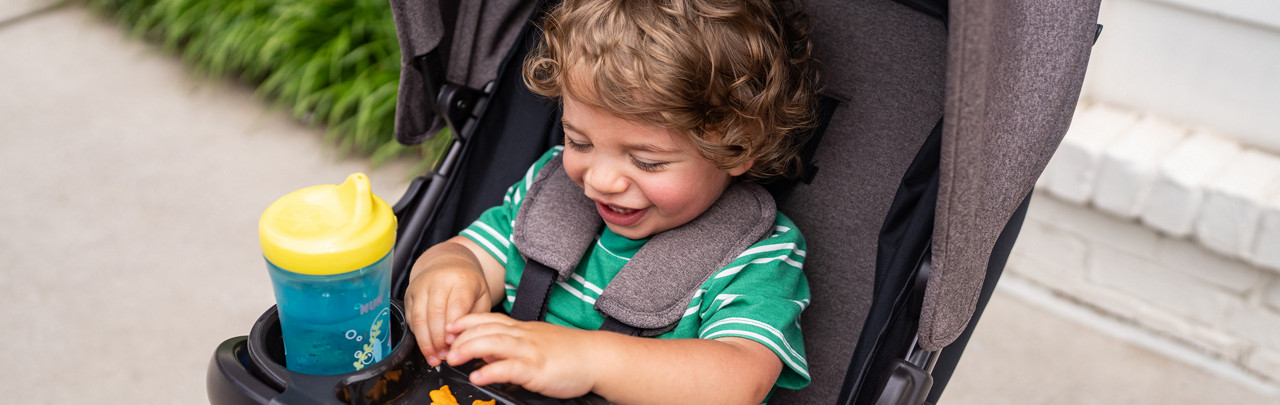
Double strollers are designed to transport two children at the same time. Convertible models allow you to start with one seat and add another later.
You might choose a double stroller if you:
Convertible designs can reduce the need to replace your stroller when your family grows. For example, the Modes™ Nest2Grow™ Stroller can expand from a single to a double with the addition of a second seat or infant car seat (sold separately), offering multiple ways to configure the stroller as your needs change.
Other options, like the Ready2Grow™ 2.0 Double Stroller, are designed to carry two children from the start, with features like two seating positions, compatibility with two infant car seats, and the ability to convert to a bench seat or standing platform for an older child.
Double strollers are generally larger and heavier than single models, which can affect storage and maneuverability. They may be designed in a tandem (one seat behind the other) or side-by-side layout, depending on the model.
When evaluating double options, consider doorway clearance, trunk space, and how frequently both seats will be used together.
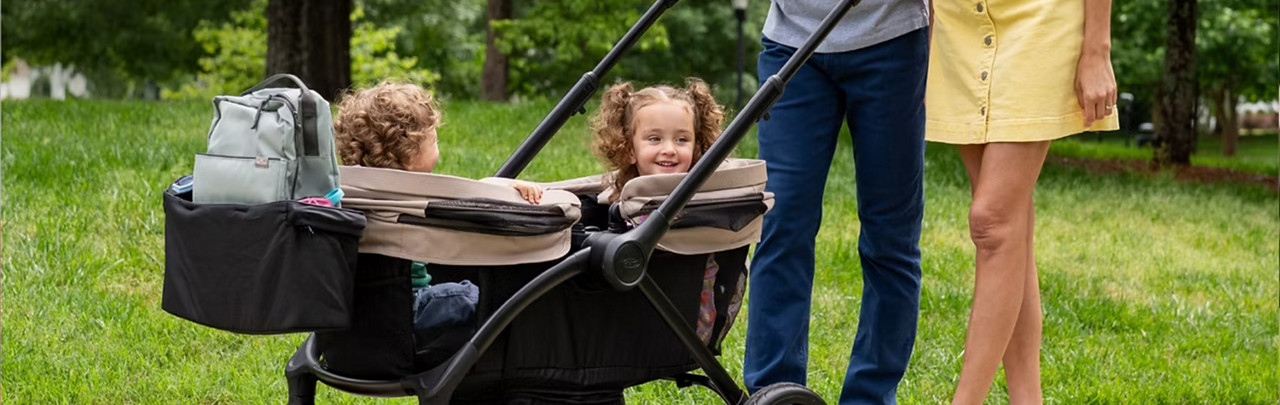
Stroller Wagons offer a more open seating layout compared to traditional stroller seats. They are often selected for longer outings or situations where extra space is helpful.
You might choose a stroller wagon if you:
The Graco® Ready2Roll™ Stroller Wagon includes two seats, adjustable UV 50 canopies, and a rotating handle. It is designed to be compatible with most Graco infant car seats with included adapters. Always review compatibility details and product instructions before use.
Stroller wagons can complement a traditional stroller for quick errands while offering extra room for longer days at the park or outdoor events.
A travel system pairs a stroller with an infant car seat so you can move your baby from the car to the stroller without needing to transfer them.
Travel systems can be purchased as a bundled set or created by pairing a compatible stroller and infant car seat. Graco infant car seats are designed to work with most Graco strollers, which allows families to choose a setup that fits their routine.
You might choose a travel system if you:
For example, the Modes™ Pramette Travel System pairs a full-size, modular stroller with an included infant car seat and offers multiple ways to ride, from infant car seat carrier to pramette to toddler stroller.
Other options, like the GoMax™ Travel System, include a lightweight stroller and infant car seat designed for portability.
Some families also choose to pair a stroller frame, such as the GoMax™ Frame Stroller, with a compatible Graco infant car seat to create their own setup. Always confirm compatibility and follow both stroller and car seat manuals.
Travel systems are often used during the infant stage and may later be complemented by a different stroller type once a child outgrows the infant car seat. If you’re preparing for a trip, reviewing guidance on traveling with a car seat and stroller can help you plan ahead.
Beyond stroller type, specific features can influence your decision. Understanding why a feature matters can help you decide whether it fits your routine.
When thinking about what to look for in a stroller, consider:
The American Academy of Pediatrics recommends choosing a stroller with a wide base, secure brakes, and a five-point harness to help reduce tipping risk.
Applicable Graco products are certified to Baby Safety Alliance Verification, a voluntary program based on adherence to ASTM standards, federal and state laws, and certain retail requirements.
This program is designed to provide peace of mind to parents that these products have been independently sample-tested to the most stringent standards.
Always follow manufacturer instructions, ensure the stroller is fully locked open before placing your child inside, and never place purses, shopping bags, parcels, or accessory items on the handle, as this can affect stability.
Choosing a stroller often feels easier when you start with your routine instead of features alone.
Ask yourself:
There is no single right answer. The goal is to choose a stroller that supports how your family moves through the week.
Some families choose one stroller that handles most situations. Others find that having two stroller types supports different parts of their routine.
If you are deciding whether to purchase one stroller or add a second later, it may help to think through how your days are structured.
For example:
Owning more than one stroller is not required. However, as routines change, some families choose to add a second stroller that better supports a new need, such as travel, a second child, or more outdoor time.
Thinking ahead about how often you will encounter stairs, uneven terrain, tight spaces, or long outings can help clarify whether one stroller will meet most of your needs or whether flexibility may be helpful later.

Stroller prices can vary widely. Cost differences may reflect:
Before deciding, review manufacturer guidelines and consider how long you expect to use the stroller and how it will support your day-to-day life.
For some families, investing in a stroller that adapts over time may support longer-term use. For others, a streamlined design may meet daily needs without added complexity.
If you are still deciding which stroller is right for you, revisit a few key questions:
Choosing based on your routine rather than trends can help you feel confident in your decision. By understanding the different types of strollers and how each one is designed to support specific needs, you can make a choice that aligns with your family’s everyday life.
Before purchasing, check the stroller’s folded dimensions and compare them to your trunk space. If possible, measure your trunk opening height and depth. Compact fold and one-hand fold features may make loading and unloading easier.
Yes. Every stroller includes a maximum child weight limit listed in the product manual and on the carton (so it can be seen at a store prior to purchasing). Always follow those limits and discontinue use once they are reached. Weight limits can vary by stroller type.
Some strollers are designed for use with newborns, with a fully reclining seat, pramette mode, or a carry cot or bassinet, such as the Modes™ Carry Cot. Others require a compatible infant car seat. Always review product guidelines to confirm appropriate use with newborns.
Full-size strollers typically offer more storage and built-in features for daily use, while lightweight strollers are designed for portability and compact folding.
Some families choose a versatile full-size stroller that adapts from infancy through toddlerhood, while others acquire additional strollers later as needs change.