Slide 1 of 4
Slide 2 of 4
Text “FAMILY” to 47226 for up to 20% off full price items
Slide 3 of 4
Slide 4 of 4
Your Browser Is No Longer Supported. Please use an alternative browser to improve your experience and security.
The move to a booster seat is a big milestone, and it often comes with one important question: high-back or backless?
Both high-back and backless booster seats arebelt-positioning boostersdesigned to help support proper vehicle seat belt fit as your child grows. While children who meet booster requirements may use either type when appropriate, many families choose to begin with a high-back booster for the added positioning support it can provide before transitioning to a backless booster. The right choice depends on manufacturer guidelines, your child’s size and readiness, and your vehicle’s setup.
Here’s how to understand the difference, what to look for, and how to approach the decision with confidence.
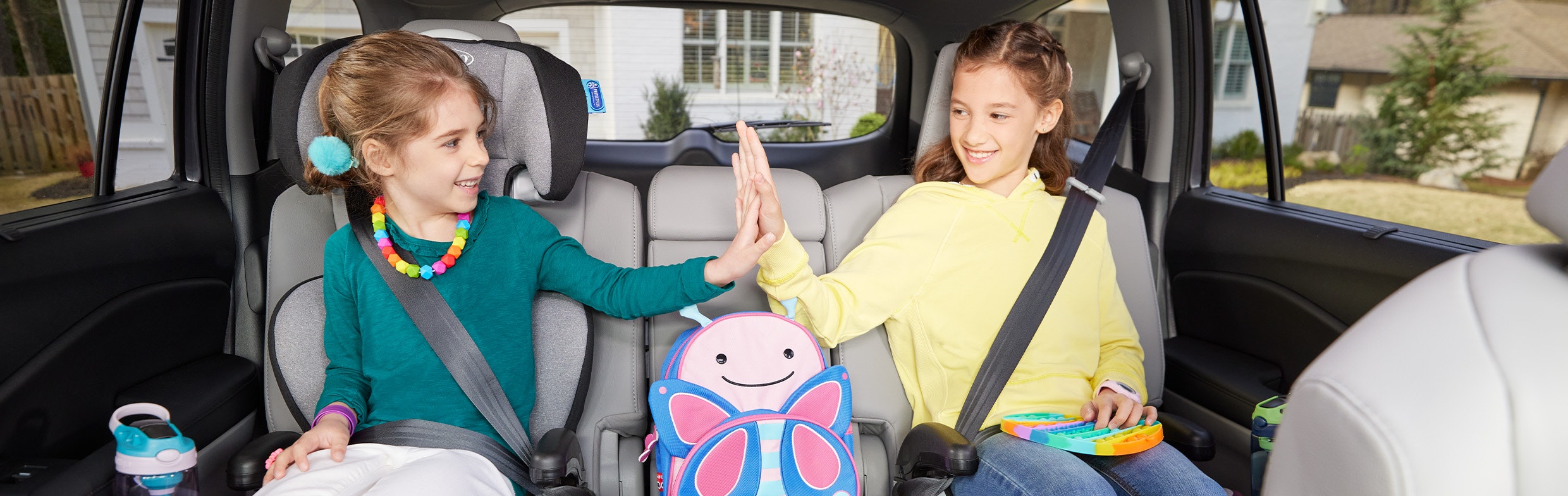
A booster seat helps position a child so the vehicle’s lap and shoulder belt sit properly: low on the hips and across the shoulder and chest. Unlike some harnessed seats, belt-positioning boosters rely on the vehicle seat belt to help restrain the child.
According to guidance from theAmerican Academy of Pediatrics (AAP)on child passenger safety, children should use a belt-positioning booster once they have outgrown their forward-facing harnessed seat and until the vehicle seat belt fits properly without a booster. You can always refer to your car seat manual and vehicle owner’s manual for guidance specific to your setup.
Readiness for a booster seat depends on your child’s size, behavior, and their ability to sit properly for the entire ride, even on longer trips.
A child may be ready for a booster seat if they*:
If a harnessed seat continues to fit well and meets manufacturer guidelines, it’s okay to wait. Every child grows at their own pace.
In some states, children must remain in a car seat or booster until at least age 8 or until they’re around 60 lb.
*Always review your local requirements in addition to your car seat and vehicle manuals.
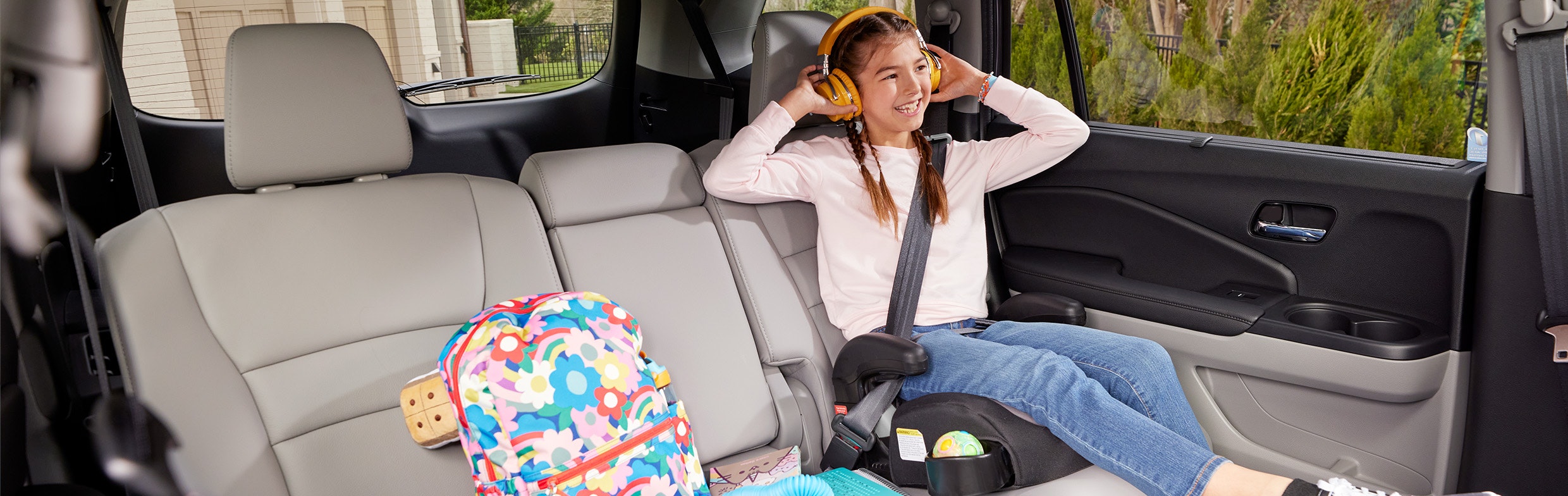
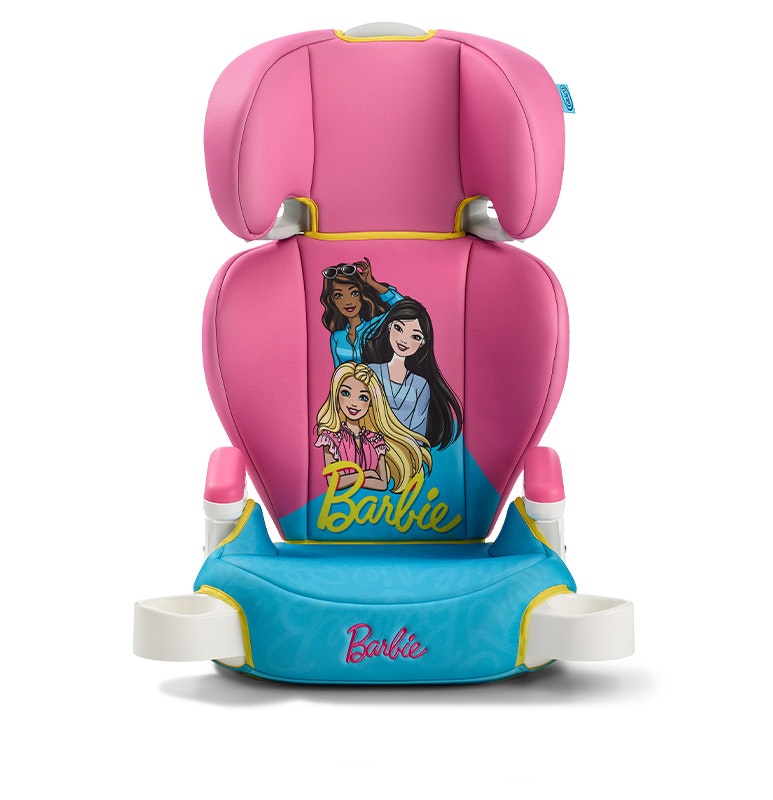
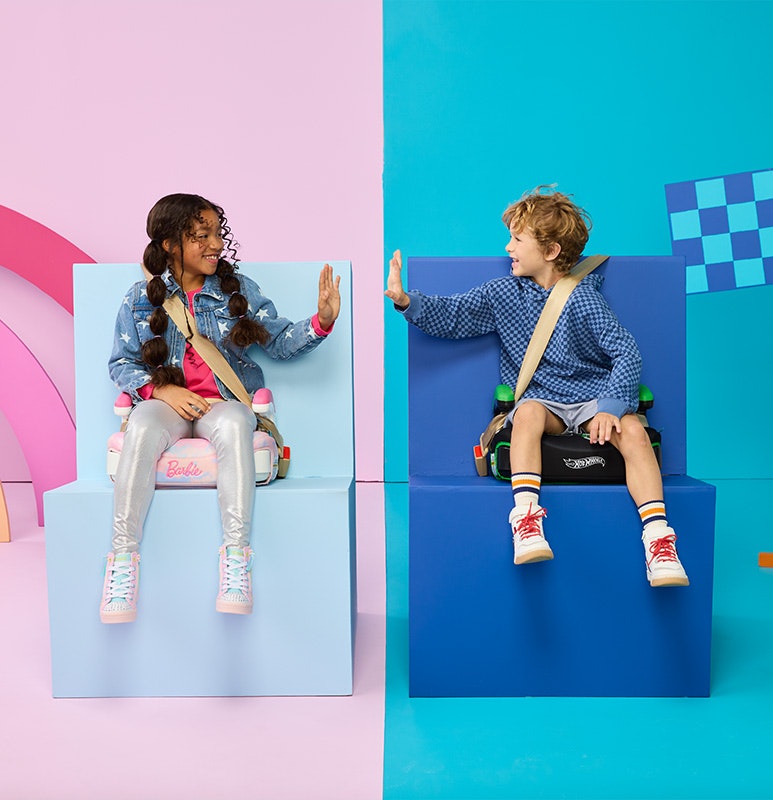
High-back and backless boosters are both belt-positioning booster seats. The difference between them relates to structure and belt guidance.
In addition to raising a child, high-back boosters include head and back support and typically feature built-in belt guides to help manage shoulder belt placement. Backless boosters, on the other hand, raise a child so the vehicle seat belt fits more appropriately across the body, without added back or head support.
Although high-back boosters are typically used first, that’s not necessarily a requirement. The best choice depends on:
Child safety organizations emphasize belt fit, vehicle support, and child behavior rather than prescribing one booster style over the other.
High-back boosters are often considered when a little extra structure or belt guidance may help your child stay comfortably positioned.
Families may choose a high-back booster because it:
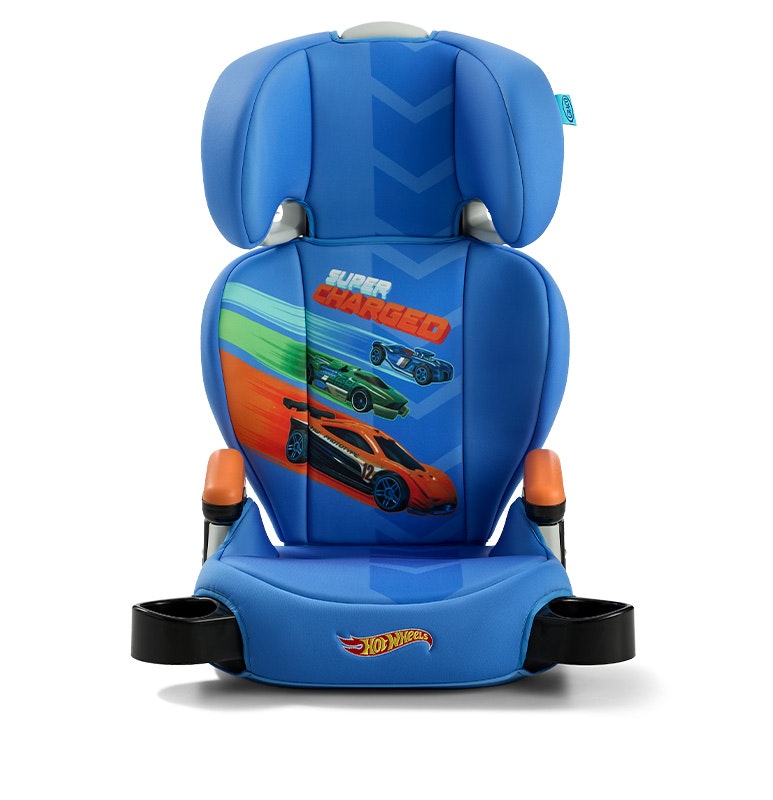
TheBarbie™ x Graco® TurboBooster® 2.0 Highback BoosterandHot Wheels™ x Graco® TurboBooster® 2.0 Highback Boosterare intended for belt-positioning booster use for children 40–100 lb and 43–57 inches when used according to instructions. These 2-in-1 models convert from high-back to backless booster, giving families flexibility as a child grows, for children who meet the product’s height and weight requirements and continue to follow product guidelines. Like all Graco booster seats, these models are designed with safety, durability, and everyday ease in mind.
Backless boosters are designed for children who can sit properly but need assistance with seat belt positioning.
A backless booster may be considered when:
When those conditions are met, a backless booster can be a practical next step for everyday use. Backless options like theBarbie™ x Graco® TurboBooster® 2.0 Backless BoosterandHot Wheels™ x Graco® TurboBooster® 2.0 Backless Boosterare intended for children 40–100 lb and 43–57 inches who can maintain proper belt positioning for the entire ride.
For additional guidance on booster seat use and belt fit, organizations likeSafe Kids Worldwideprovide educational resources that align with manufacturer instructions and vehicle requirements.
Choosing a booster seat typically comes down to three key considerations: child fit, child readiness, and vehicle fit.
Some boosters include LATCH to help keep the seat in place even when unoccupied, which can be helpful as children climb in and out. Adjustable headrests can also support proper shoulder belt positioning as your child grows. The vehicle seat belt is what restrains the child.
When checking belt fit:
The shoulder belt should never be placed behind your child’s back, even if the belt feels uncomfortable. Proper shoulder belt positioning is an important part of booster seat use.

The right booster seat supports appropriate seat belt positioning in your vehicle and fits your family’s daily routine.
Key considerations include:
It’s a good idea to recheck fit periodically as a child grows, since belt positioning can change over time.
A booster may no longer be needed once the vehicle seat belt fits the child correctly without it.
This usually means:
Age, height, and legal requirements vary. Always follow vehicle instructions, product guidelines, and local regulations when making this transition.
In some cases, yes. Fit and vehicle support should be evaluated separately for each seating position.
No. Seat belt fit and headrest support can vary by seating position, which may affect how a booster fits.
Some children can buckle themselves, but an adult should always check belt placement before driving.
Try adjusting the booster or seating position if possible. If belt fit remains inconsistent, a different booster style or seating position may be more appropriate.
Booster seats have height and weight limits. As a child grows, confirm the booster continues to meet the product’s stated guidelines.